

Our Research
The Behavioral Neuroscience stream investigates gene function in behavior and maps neuron circuits of the brain to behavior in the fruit fly (Drosophila melanogaster) model system. Researchers achieve this by reducing or eliminating the expression of hypothesized genes for
certain fly behaviors and studying the effect of the manipulation on the behaviors.
Currently focused on investigating the genetic basis of learning and memory using the fly as a model system, we use associative learning (conditioning) on mutant flies to investigate for genes important in this characteristic. We are pursuing this in the context of the role of the fly’s immune system in learning and memory as well as modeling alcohol addiction in flies through their learning ability.
To study neuron function, we also use optogenetics to activate or reduce activity of defined neurons and explore the outcome of the manipulation. These manipulations are achieved on a genetic level in the organism using transmission genetics to create the required transgene and mutant combinations in the fly.
Our Strategy
We investigate for gaps in knowledge in the field of neuroscience, develop approaches to address those gaps, generate the knowledge required and publish and disseminate to science.
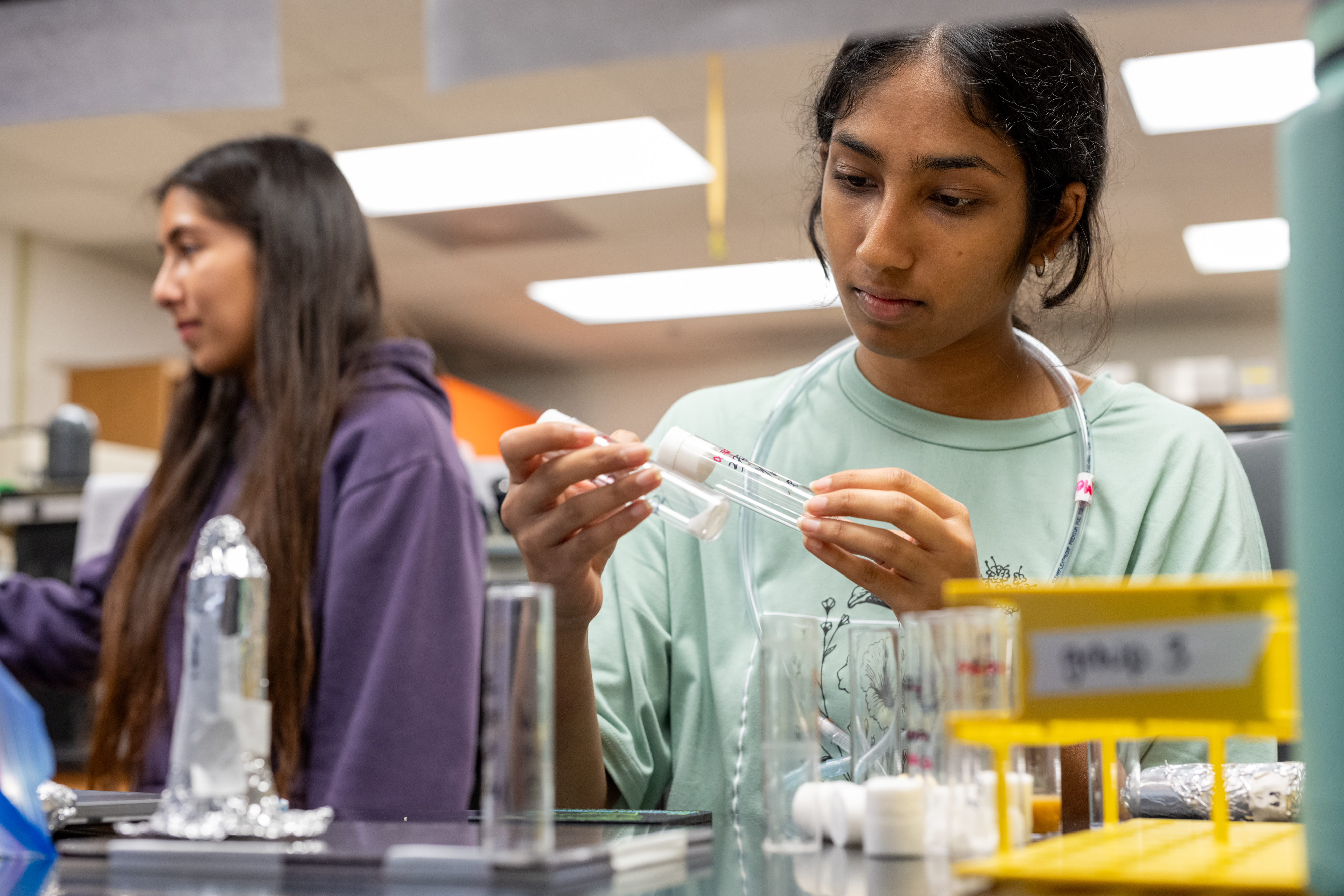
Students focus on the development of experimental design, critical/ analytical thinking and interpretation of literature, and data analysis. In addition, our researchers develop teamwork and collaborative skills through wet lab experimentation and written and verbal scientific
communication.
Behavioral Neuroscience Research Techniques
- Analysis of behavioral data using the R analysis platform
- Neuroscience literature research and communication
- Optogenetics
- Fly transmission genetics
- Fly behaviors

Our Impact
Our research generates knowledge of genes, signaling pathways and biological mechanisms underlying behavior. Currently, we are investigating the processes of learning and memory and alcohol dependency using the fly system. Many genes and pathways involved in behavior and disease in humans have analogous pathways in the Drosophila system. This, along with its outstanding gene manipulation toolkit, makes this organism an optimal model to study behavioral traits and diseases in humans.
Our Team

Thilini Wijesekera
- Assistant Professor of Practice
Research Educator | Behavioral Neuroscience Stream

Nigel Atkinson
- Professor
Resources
Course Credit
Research Outcomes
- Wijesekera TP, Wu Z, Stephens NP, Godula R, Lew LK, Atkinson NS. A Non-Nuclear NF-κB Modulates Alcohol Sensitivity But Not Immunity. J Neurosci. 2022 Apr 20;42(16):3329-3343. doi: 10.1523/JNEUROSCI.1963-21.2022. Epub 2022 Mar 10. PMID: 35273084; PMCID: PMC9034786.
https://www.jneurosci.org/content/42/16/3329.long - Wijesekera TP, Stephens NP, Hingnekar A, Gedamu HY, Dezso NR, Strange M, Risbud SM, Dinh AD, Atkinson NS. The non-nuclear DifB NF-κB isoform affects courtship, circadian, and locomotor behavior in adult Drosophila melanogaster. Front Behav Neurosci. 2025 Dec 10;19:1689016. doi: 10.3389/fnbeh.2025.1689016. PMID: 41451171; PMCID: PMC12727931.
https://www.frontiersin.org/journals/behavioral-neuroscience/articles/10.3389/fnbeh.2025.1689016/full