What’s All the Hype about Presenting at a Research Conference?

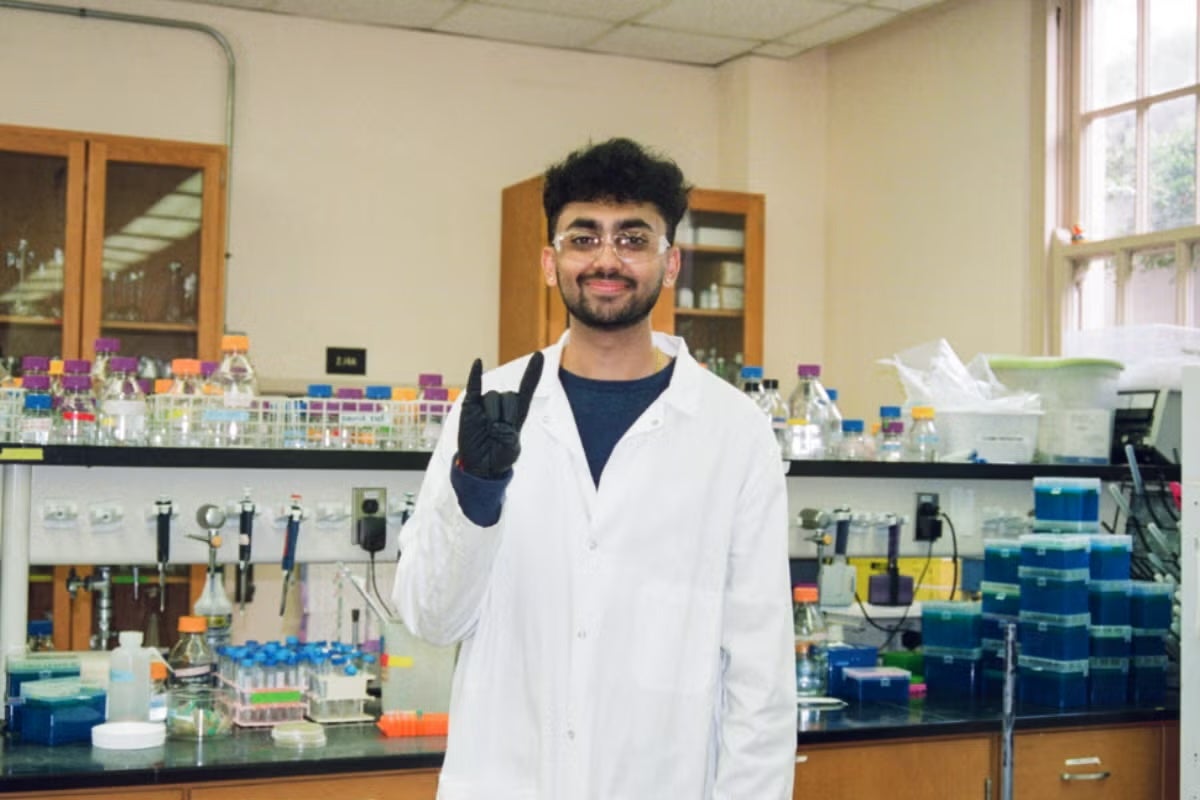
Aptamer undergraduate students Alex Trejo, Avery Matthews, Alvin Pham, and Sohan Jain at the 2026 ASBMB Conference (National Harbor, Maryland).
As the 25th Anniversary of the Tech & Science Undergraduate Research Forum (URF) approaches, many FRI students may be wondering what all the excitement is about. At first glance, presenting at a research conference can sound like just another assignment – another poster, another deadline, more work layered onto an already busy semester. But for students who take that step, the experience often becomes something much bigger: a moment when they begin to see themselves not just as students completing a project, but as researchers with something meaningful to contribute.
For many FRI students, presenting at the URF is the first time they truly lead their research story. They decide what questions matter most, what data best support their conclusions, and how to communicate their work to a broader audience. That ownership is powerful. Standing beside a poster or explaining a project to a curious visitor transforms research from something done for a class into something done by a scientist.
Along the way, students meet peers and mentors from across campus or around the world who are asking similar questions or approaching problems from entirely different perspectives. Sometimes that looks like an unexpected dinner conversation at a national meeting - one FRI researcher at a recent ASBMB conference left with new collaborators and plans to stay in touch. These conversations - often informal, curious, and encouraging - help students realize they are part of a larger scientific community.
Most importantly, presenting at a conference is a crystallizing experience. Preparing to explain a project forces deep reflection: Why does this work matter? What did I actually learn? What comes next?
In answering these questions, students often begin to develop a stronger scientific identity - seeing themselves as capable contributors to science and being seen that way by others. The conference itself may only last a few hours, but the impact remains long after. Students leave with confidence, clarity, and a sense that their research is legitimate and valued. For many FRI students, that moment becomes a turning point - one that shapes how they think about their education, their future, and their place in science long after the posters come down.
About the Author
Dr. Gwen Stovall is an Associate Professor of Practice and the Research Educator for the Aptamer Stream. In collaboration with Dr. Andy Ellington, the Aptamer stream engages students in hands‑on biochemistry and molecular biology research to discover DNA and RNA molecules with applications in diagnostics, therapeutics, and sensing.